If you are pricing an older home, rewiring a house cost Ireland is likely one of your biggest questions. A full rewire is not a cosmetic job. It is a safety upgrade that replaces old cables, modernises fuse boards, adds enough sockets for daily life and gives the house a tested electrical system.
The exact cost of rewiring a house in Ireland depends on the home, not just the number of bedrooms. Property size, access under floors, the age of the wiring, labour costs and the finish you want can all change the final quote. This guide explains what you can expect to pay, what affects the price and where grants may help.
Rewiring a House Cost Ireland: Quick Price Guide
As a general 2026 guide, the cost to rewire a house in Ireland often falls into these ranges:
| Property type | Typical rewire guide price |
|---|---|
| 1-bed apartment | €5,000 to €8,000 |
| Standard 2-bed home | €8,000 to €11,000 |
| 3-bed home | €11,000 to €14,000 |
| 4-bed home | Starts from €14,000+ |
These figures are broad because house rewire costs vary considerably. Some quotes exclude VAT, plastering, painting, additional data points, smart-home wiring, alarms or a new main supply. Always ask what is included before comparing prices.
What Affects House Rewire Costs?
Property size is the biggest factor. A larger house needs more cable, more circuits, more sockets, more lighting points and more time on site. A compact two-bedroom home is usually faster to complete than a large detached house with an attic conversion, garden room or extension.
Access also matters. Timber floors and open ceilings make it easier to run new cable. Solid concrete floors, old plaster, awkward attic spaces and fitted furniture can slow the job down. If walls need chasing and repair, allow additional money for plastering and decorating.
Labour costs are another major part of the quote. Electricians in Ireland must account for skilled labour, testing, insurance, tools, travel, waste disposal and certification. Cheaper is not always better. A low quote may leave out testing, certification, making good or enough sockets for modern use.
The chosen specification matters too. A basic rewire may include standard white sockets and switches. A higher-specification job may include USB sockets, outdoor power, EV charger readiness, data cabling, recessed lighting, kitchen appliance circuits, smart controls or additional smoke and heat alarms.
What Should Be Included in a Full Rewire?
A proper full house rewire should normally include:
- New electrical cables throughout the property
- New electrical circuits
- Replacement sockets and switches
- New or upgraded lighting points
- Earthing and bonding checks
- A modern consumer unit or fuse board
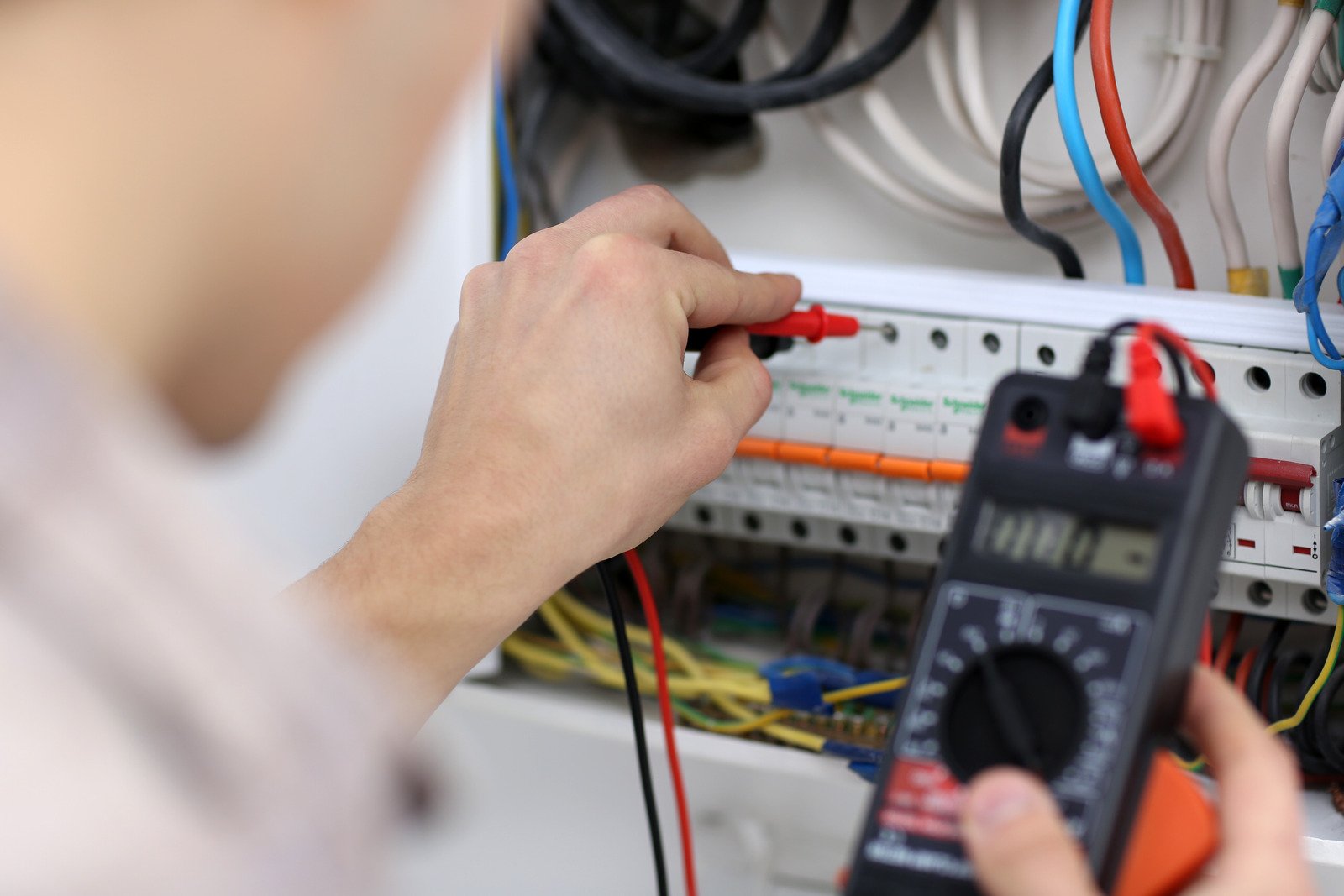
- Testing and inspection of the completed installation
- The appropriate completion certificate
Many older fuse boards are not suitable for current electrical loads. Your electrician should test the completed installation and issue the appropriate certification.
In Ireland, domestic electrical work should be carried out by a Safe Electric registered electrical contractor. A completion certificate is important for safety, insurance, future renovation work and selling the property.
Do You Need to Move Out During a Rewire?
You can sometimes live in a house while it is being rewired, but it is rarely ideal. Power will be unavailable in parts of the home, floors may be lifted, walls may be chased and rooms can become dusty.
If the house is empty, electricians can usually work faster and more efficiently. For a typical house, a rewire may take approximately five to ten working days. Larger homes, occupied properties, complex older buildings and jobs with numerous additional features may take longer.
Ask the contractor to provide a clear schedule before work begins.
Grants That May Reduce the Cost to Rewire
Financial support may be available to lessen rewiring a house cost ireland, but you should check your eligibility before beginning any work.
The Housing Aid for Older People Grant may help eligible older homeowners carry out essential repairs. It is means-tested and administered by local authorities. The grant may cover essential electrical repairs where they are necessary to address poor housing conditions.
The Vacant Property Refurbishment Grant may also help when bringing a vacant or derelict property back into use. Rewiring may form part of a wider approved refurbishment project.
Always check the latest grant limits, eligibility requirements and application process with your local authority to see if you can change how high rewiring a house cost Ireland is for you. You will normally need to apply and receive written approval before work begins.
Signs Your House May Need Rewiring
Your house may need an electrical inspection or rewire if you notice:
- Very old or damaged wiring
- An outdated fuse board
- Breakers that trip regularly
- Lights that flicker
- Sockets or switches that feel warm
- Burning smells near electrical fittings
- Buzzing or crackling sounds
- Scorch marks around sockets or switches
- Repeated electrical faults
A renovation is also a good time to assess the electrical installation. If you are opening walls, replacing a kitchen, building an extension or upgrading the heating system, it may be cheaper and cleaner to complete the electrical work at the same time.
How to Compare Quotes from Electricians in Ireland
Get at least two or three written quotes from Safe Electric registered electricians in Ireland.
Ask each contractor to confirm:
- The work included in the quotation
- The number of sockets and circuits allowed for
- Whether smoke and heat alarms are included
- Whether plastering or making good is included
- Whether VAT is included
- Who will issue the completion certificate
- How long the work should take
- Whether furniture or flooring must be moved
A good quotation should be detailed enough for you to compare it with other quotations line by line.
Final Thoughts on Rewiring a House Cost Ireland
Rewiring a house cost Ireland searches often show very different prices because no two properties are the same. A simple, vacant three-bedroom house may cost considerably less than an occupied period property with solid floors and a high electrical specification.
The best approach is to treat online prices as a general guide and then arrange a detailed inspection and written quotation. Focus on safety, certification and long-term value.
A properly planned rewire can make your home safer, easier to insure, more practical to live in and better prepared for modern appliances.
Frequently Asked Questions
How Much Does It Cost to Rewire a 3-Bed House in Ireland?
A standard three-bedroom house may cost approximately €6,500 to €14,000 to rewire. Urban, occupied or complex properties may cost more. The final price depends on access, specification, labour costs, VAT and whether plastering is included.
Can I Do a Partial Rewire Instead of a Full Rewire?
Yes, but it depends on the condition of the existing electrical installation. A partial rewire may be suitable when only one area is unsafe or undergoing renovation. If the wiring is old throughout the house, a full rewire is usually the better long-term option.
Does Rewiring Include Plastering?
Not always. Rewiring may involve chasing walls, lifting floors and cutting access routes. Some electricians include basic making good, while others leave plastering and painting to another tradesperson. Confirm this in writing before accepting the quotation.
Is Rewiring Worth the Money?
Rewiring is worthwhile when the existing wiring is unsafe, outdated or unsuitable for modern electrical use. It can reduce electrical risks, support modern appliances, improve convenience and provide the certification needed for insurance or a future sale. Rewiring a house cost Ireland is something to shop around for; reach out to your nearest electrician for further information on your house’s required systems.